video of the day

my slide show

Showing posts with label news. Show all posts

Saturday, January 28, 2012

FACEBOOK WILL END ON MARCH 15th, 2012!


PALO ALTO, CA –Mark Zuckerberg announced that Facebook will be shut down in March of 2012. Managing the site has become too stressful.
“Facebook has gotten out of control,” said Zuckerberg in a press conference outside his Palo Alto office, “and the stress of managing this company has ruined my life. I need to put an end to all the madness.”
Zuckerberg went on to explain that starting March 15th of next year, users will no longer be able to access their Facebook accounts.  That gives users (and Facebook addicts) a year to adjust to life without Facebook.
“After March 15th, 2012 the whole website shuts down,” said Avrat Humarthi, Vice President of Technical Affairs at Facebook. “So if you ever want to see your pictures again, I recommend you take them off the internet. You won’t be able to get them back after Facebook goes out of business.”
Zuckerberg said the decision to shut down Facebook was difficult, but that he does not think people will be upset.
“I personally don’t think it’s a big deal,” he said in a private phone interview. “And to be honest, I think it’s for the better. Without Facebook, people will have to go outside and make real friends. That’s always a good thing.”
Some Facebook users were furious upon hearing the shocking news.
“What am I going to do without Facebook?” said Denise Bradshaw, a high school student from Indiana. “My life revolves around it. I’m on Facebook at least 10 hours a day. Now what am I going to do with all that free time?”
However, parents across the country have been experiencing a long anticipated sense of relief.
“I’m glad the Facebook nightmare is over,” said Jon Guttari, a single parent from Detroit. “Now my teenager’s face won’t be glued to a computer screen all day. Maybe I can even have a conversation with her.”

Those in the financial industry are criticizing Zuckerberg for walking away from a multibillion dollar franchise. Facebook is currently ranked as one of the wealthiest businesses in the world, with economists estimating its value at around 7.9 billion.
But Zuckerberg remains unruffled by these accusations. He said he will stand by his decision to give Facebook the axe.
“I don’t care about the money,” said Zuckerberg. “I just want my old life back.”
The Facebook Corporation suggests that users remove all of their personal information from the website before March 15th, 2012. After that date, all photos, notes, links, and videos will be permanently erased.

Thursday, October 20, 2011

Gaddafi killed as Libya's revolt claims hometown


SIRTE, Libya (Reuters) - Muammar Gaddafi was killed on Thursday as Libya's new leaders declared they had overrun the last bastion of his long rule, sparking wild celebrations that eight months of war may finally be over.
Details of the death near Sirte of the fallen strongman were hazy but it was announced by several officials of the National Transitional Council (NTC) and backed up by a photograph of a bloodied face ringed by familiar, Gaddafi-style curly hair.
"He was killed in an attack by the fighters. There is footage of that," the NTC's information minister, Mahmoud Shammam, told Reuters.
Western powers, who have backed the rebellion which took the capital Tripoli two months ago, said they were still checking. NATO said its aircraft fired on a convoy near Sirte earlier, but would not confirm reports that Gaddafi had been a passenger.
Several NTC fighters in Sirte said they had seen Gaddafi shot dead, though their accounts varied.
With a final declaration of the country's "liberation" from 42 years of one-man rule apparently imminent, and crowds firing in the air and dancing in the streets of Tripoli and Benghazi, Libyan television said NTC chairman Mustafa Abdel Jalil was about to address the nation.
The two months since the fall of Tripoli have tested the nerves of the motley alliance of anti-Gaddafi forces and their Western and Arab backers, who had begun to question the ability of the NTC forces to root out diehard Gaddafi loyalists in Sirte and a couple of other towns.


Several sources claim Libya's Gadhafi deadVarious fighting groups in Libya are reporting that longtime leader Moammar Gadhafi has been killed, but Western sources are not confirming the development. (20 October 2011)

Officials said some of Gaddafi's entourage had been killed in the same incident, while his son Mo'tassim and other aides were taken prisoner. Another son, Saif -- long the heir-apparent -- was believed by the NTC to be still at large, possibly in the immense southern deserts of the Libyan Sahara.
ARAB SPRING
The death of Gaddafi himself became perhaps the most dramatic development since the Arab Spring revolts that have unseated rulers in neighbouring Tunisia and Egypt and threaten the grip on power of the leaders of Syria and Yemen.
"He (Gaddafi) was also hit in his head," NTC official Abdel Majid Mlegta told Reuters. "There was a lot of firing against his group and he died."
Mlegta told Reuters earlier that Gaddafi, who was in his late 60s, was captured and wounded in both legs at dawn on Thursday as he tried to flee in a convoy which NATO warplanes attacked. He said he had been taken away by an ambulance.
An NTC fighter in Sirte said he had seen Gaddafi shot after he was cornered and captured in a tunnel near a roadway.
The capture of Sirte means Libya's ruling NTC should now begin the task of forging a new democratic system which it had said it would get under way after the city, Gaddafi's hometown rebuilt as a showpiece for his rule, had fallen.
As potentially vast revenues from oil and gas begin to roll in again, Libya's six million people, scattered in towns spread across wide deserts, face a major task in organising a new system of government that can allocate resources across long-competing tribal, ethnic and regional divisions.
Gaddafi, wanted by the International Criminal Court on charges of ordering the killing of civilians, was toppled by rebel forces on Aug. 23, a week short of the 42nd anniversary of the military coup which brought him to power in 1969.
NTC fighters hoisted the red, black and green national flag above a large utilities building in the centre of a newly-captured Sirte neighbourhood and celebratory gunfire broke out among their ecstatic and relieved comrades.
Hundreds of NTC troops had surrounded the Mediterranean coastal town for weeks in a chaotic struggle that killed and wounded scores of the besieging forces and an unknown number of defenders.
NTC fighters said there were a large number of corpses inside the last redoubts of the Gaddafi troops. It was not immediately possible to verify that information.
(Writing by Jon Hemming, William Maclean and Alastair Macdonald; Editing by David Stamp)

Friday, October 14, 2011

How Web Sites Share Your Personal Data–Even When They Promise Not To


You’ve probably scanned phrases like these as you’ve logged in to your favorite Web sites:
“Our privacy policy is to share personal information only with the owner’s consent.”
or
“We will not trade, rent or sell your personal information, without your prior consent, except as otherwise set forth herein.”
When I read these lines, I used to think they meant that my personal information doesn’t leave the company that owns the particular site I’m using.
Wrong.
A new study from Johnathan Mayer, of Stanford University’s Center for Internet and Society, shows just what happens to your personal information when you sign up, join, or just browse at any of 185 heavily-trafficked Web sites. Here’s a sampling of what he found:
  • Viewing a local ad on the Home Depot Web site sent the user’s first name and email to 13 companies.
  • Entering the wrong password on the Wall Street Journal Web site sent the user’s email address to seven companies.
  • Changing the user settings on the video-sharing site Metacafesent the user’s first name, last name, birthday, email address, physical address, and phone numbers to two companies.
  • Signing up on the NBC Web site sent the user’s email address to seven companies.
  • Signing up on the Weather Underground Web site sent the user’s email address to 22 companies.
  • Clicking the validation link in the Reuters signup email sent the user’s email address to five companies.
  • Using the classmates.com Web site sent the user’s first and last names to 22 companies.
  • Web site OkCupid appears to make a wide range of data about its users available to two different data providers. That data includes users’ ages; whether or not they have cats, dogs, or children; how often they drink or use drugs; their ethnicity; their income; their relationship status; and their religion, among other traits.
How does this happen?
In his paper, Mayer explains that most Web sites do not consider a username or user ID to be personally identifying information, even though many people use a variation of their name, or something close to it, as a user ID.  When you sign up for a Web site, the site often generates a URL that contains your user name. Mayer uses this example of a URL that might be generated when a Leland Stanford signs up to use a Web site called example.com.
http://example.com/register?username=GoCardinal&name=Leland%20Stanford&email =Leland%40stanford.edu&…
Any third party embedded in that Web page-an advertiser, perhaps, or a company that serves ads, such as doubleclick, can write a script to capture this URL. From there, it’s pretty easy to simply grab “GoCardinal” as Leland Stanford’s username, and tie any Web activity on the part of “GoCardinal” back to Leland Stanford.
Personal information can also be revealed by a site’s so-called landing page for its registered users. When Leland Stanford goes to example.com, he might very well be greeted by a page saying, “Welcome Leland Stanford!” Any embedded third-party scripts can report back with the page title, which in this case would include Leland Stanford’s name.
Linking “private” information to publicly-available data
From there, the third-party company may buy identifying information from a so-called matching service, or to try to match it up the bits and pieces they’ve collected against a larger stream of data they already have access to.
Mayer points out that legally, the Web sites he visited for his research seem to be on the right side of the law. Technically, they’re not sharing or selling the information. They’re just not being very careful with it.  In the industry, this is referred to as “information leakage,” and while the term may implies that such leakage is inadvertent, Mayer says “information leakage” is actually a bit of a term of art.
Do you care how much of your personal information is available online? Do you try to restrict it in any way?

Sunday, October 2, 2011

truth's of gandhi's family

Must Read.....................For Truth


>
> 1. TATAs took 100 years to become billionaire, Ambanis took 50 years
> (after utilizing all its resources), where as Robert Vadra took less than 10
> years  to become fastest multi billionaire....
>

>
2. All newspapers are scared to discuss the story of Robert Vadra because
> of severe threat from Sonia Gandhi and Congress govt.
>
> 3. After Robert Vadra got married with Priyanka Gandhi, Robert's father
> committed suicide under mysterious circumstances, his brother found dead
> in
> his delhi residence and his sister found dead in mysterious car accident.
> These reports were not published in any Indian media.
>
> 4. He is having stakes in Malls in premier locations of India, he is
> having
> stakes in DLF IPL, and DLF itself. He was involved in CWG corruption - DLF
> was responsible for development of Commonwealth games, and Kalmadi gave
> favoritism to DLF because of Robert Vadra's direct interest and business
> partnership with DLF.
>
> ‎5. Robert Vadra owns many Hilton Hotels including Hilton Gardens New
> Delhi
>
> 6. Robert Vadra's association with Kolkata Knight Ryders has never been
> reported by Indian media
>
> 7. He has 20% ownership in Unitech, Biggest beneficiary ownership of 2G
> Scam. Because of Robert's involvement in this scam, there are concerns
> that
> investigation would never reach decisive conclusion...
> 8. He owns prime property in India specially commercial hubs, and taxi
> business but for Air Taxi. He owns few private planes as well.
>
> 9. He has direct link with Italian businessman Quatrochi.
>
> WAKE UP FELLOW INDIANS ! FIGHT AGAINST CORRUPTION !!!!!!!!!!!!
>


Wednesday, September 14, 2011

పాలనలో మోడీ కింగ్, అమెరికా కాంగ్రెసు నివేదిక


Narednra Modi
వాషింగ్టన్: ముఖ్యమంత్రి నరేంద్ర మోడీ నేతృత్వంలో భారతదేశంలో సమర్థపాలనను, ప్రతిభావంతమైన అభివృద్ధిని అందిస్తున్న రాష్ట్రంగా గుజరాత్ నిలుస్తుందని అమెరికా కాంగ్రెసు పరిశోధనా సర్వీసు నివేదిక తెలియజేస్తోంది. నరేంద్ర మోడీ నాయకత్వంలోన గుజరాత్ జాతీయ ఆర్థిక పెరుగుదలకు ఎంతో అందిస్తోందని చెప్పింది. గుజరాత్ దారిలోనే బీహార్ నడుస్తోందని చెప్పింది. బీహార్ ముఖ్యమంత్రి నితీష్ కుమార్‌ను కూడా నివేదిక ప్రశంసలతో ముంచెత్తింది.
  Read:  In English 
మోడీ ఆర్థిక ప్రక్రియను సరైన దారిలో పెట్టారని, రెడ్ టేపిజాన్ని, అవినీతిని అరికట్టారని, దానివల్ల జాతీయ ఆర్థిక పెరుగుదలకు గుజరాత్ దోపదపడిందని నివేదిక అభిప్రాయపడింది. 94 పేజీల ఆ నివేదికను అమెరికా ప్రజాప్రతినిధుల కోసం సెప్టెంబర్ 1వ తేదీన విడుదల చేశారు. 2002 అల్లర్ల నుంచి బయటపడడానికి ప్రయత్నిస్తూనే రాష్ట్రంలో ఆధునిక రోడ్ల నిర్మాణంలో, విద్యుచ్ఛక్తి మౌలిక సదుపాయాల కల్పనలో మోడీ ముందంజవేశారని, ఇటీవలి సంవత్సరాల్లో గుజరాత్ 11 శాతం వార్షథిక పెరుగుదల రేటు సాధించిందని నివేదిక చెప్పింది. జనరల్ మోటార్స్, మిత్సుబిషి వంటి కీలకమైన సంస్థలు కూడా గుజరాత్‌లో పెట్టుబడులు పెట్టడానికి ముందుకు వస్తున్నాయని చెప్పింది. భారతదేశంలోని మొత్తం జనాభాలో 5 శాతం మాత్రమే జనాభా ఉన్న గుజరాత్ భారత ఎగుమతుల్లో ఐదింట ఒక్క శాతాన్ని సాధించిందని చెప్పింది.

బీహార్‌లో కుల ప్రాతిపదిక రాజకీయాలను పక్కకు నెడుతూ సుపరిపాలనను అందిస్తూ ముఖ్యమంత్రి నితీష్ కుమార్ జాతీయ స్థాయిలో పేరు సంపాదించుకున్నారని నివేదిక ప్రశంసించింది. శాంతిభద్రతలను పరిరక్షించడంలో నితీష్ విజయం సాధించారని చెప్పింది. పౌరులకు ప్రత్యక్ష ప్రయోజనం చేకూరే విధంగా మౌలిక సదుపాయాలను, విద్యును అభివృద్ధి చేస్తున్నారని చెప్పింది. మోడీ, నితీష్ ఉత్తరప్రదేశ్ ముఖ్యమంత్రి మాయావతికి స్ఫూర్తినిచ్చాయని చెప్పింది. ఆంధ్రప్రదేశ్‌లో తెలంగాణ సమస్యను కూడా నివేదిక ప్రస్తావించింది.

Thursday, June 2, 2011

తెలంగాణ ఇవ్వడమే మేలు: ఎకనామిక్ టైమ్స్ సంపాదకీయం


Telangana
హైదరాబాద్: ఆంధ్ర ప్రదేశ్ రాష్ట్రాన్ని విభజిస్తూ ప్రత్యేక తెలంగాణ రాష్ట్రం ఇవ్వడానికి ఇదే మంచి సమయం అంటూ ఎకనమిక్ టైమ్స్ ఆంగ్ల పత్రిక తన సంపాదకీయాన్ని ప్రచురించింది. టైమ్ ఫర్ తెలంగాణ అంటూ ఓ సంపాదకీయాన్ని బుధవారం ప్రచురించింది. అందులో తెలంగాణ ఇప్పుడు ఇవ్వాల్సిన ప్రాధాన్యతను చెప్పారు. అంతేకాదు రాష్ట్ర విభజన ద్వారా కాంగ్రెసు ఏమీ నష్టపోదని తెలంగాణలో అనూహ్యంగా బలం పుంజుకుంటుందని సీమాంధ్రలో తాత్కాలికంగా మాత్రమే ప్రభావం పడుతుందని చెప్పారు. రాష్ట్ర విభజనతో తెలంగాణకు, ఆర్థిక రంగానికి, కాంగ్రెసుకూ మేలు జరుగుతుందని స్పష్టం చేసింది. దేశానికి స్వాతంత్ర్యం వచ్చినప్పటికీ ఇప్పటికి రాష్ట్రాల సంఖ్య రెండింతలకంటే ఎక్కువయ్యాయని తెలిపింది. రాష్ట్రాలు అన్ని భాషా లేదా జాతీయ ఉద్యమాల ద్వారానే ఏర్పడ్డాయని గుర్తు చేసింది.


తాజాగా ఏర్పడ్డ కొత్త రాష్ట్రాలు మాతృరాష్ట్రాల కంటే అభివృద్ధి పొందిన విషయాన్ని గుర్తు చేశాయి. గుజరాత్, ఛత్తీస్‌గఢ్, జార్ఖండ్, ఉత్తరాఖండ్ రాష్ట్రాలు వాటి మాతృ రాష్ట్రాల కంటే ముందంజలో ఉన్నాయని స్పష్టం చేసింది. అటవీ, ఖనిజ సంపద ఉన్న తెలంగాణ కూడా ఇదే విధంగా అభివృద్ధి చెందుతుందనడంలో ఎలాంటి సంశయం అవసరం లేదని తెలిపింది. అంతేకాదు కాంగ్రెసు తెలంగాణకు అనుకూలంగా నిర్ణయం తీసుకోక పోవడానికి ఉన్న కారణాల్లో అన్నీ తొలగిపోయాయని కూడా పేర్కొంది. దివంగత ముఖ్యమంత్రి వైయస్ రాజశేఖరరెడ్డి తెలంగాణకు బాగా వ్యతిరేకించి వ్యక్తి అని అలాంటి శక్తివంతమైన వ్యక్తి ఇప్పుడు లేరని తెలిపింది. అంతేకాదు ఇటీవలి ఉప ఎన్నికల్లో కూడా సీమాంధ్రలో జగన్ కాంగ్రెసును దెబ్బ తీసిన విషయాన్ని గుర్తు చేసింది. తెలుగుదేశం పార్టీ ఏం తేల్చుకోలేక ఊగిసలాడుతుందని తెలిపింది.


అయితే వైయస్‌కు భిన్నంగా ప్రస్తుత ముఖ్యమంత్రి కిరణ్ కుమార్ రెడ్డి తెలంగాణకు వ్యతిరేకంగానో, అనుకూలంగానో లేరని అధిష్టానం నిర్ణయానికి కట్టుబడి ఉండటానికి ఆయన సిద్ధంగా ఉన్నారని తెలిపింది. తెలంగాణ ఏర్పాటు వల్ల సీమాంధ్రలో జరిగే నష్టాన్ని తెలంగాణలో పూడ్చుకుంటుందని అయినప్పటికీ సీమాంధ్రలో తాత్కాలకంగా మాత్రమే ప్రభావం పడుతుందని తెలిపింది. ఒకవేళ తెలంగాణ ఇవ్వకుంటే నిత్యం రగులుతున్న అటు తెలంగాణలో, ఇటు సీమాంధ్రలో సమస్య ఉంటుందని తెలిపింది. అన్నింటికన్నా ముఖ్యంగా తెలంగాణ ఇవ్వాల్సిన ఆవశ్యకత ఏమంటే తెలంగాణ ప్రజలు తమకు ప్రత్యేక రాష్ట్రం ఉండాలని బలంగా విశ్వసిస్తున్నారని తెలిపింది. తెలంగాణ ఏర్పాటుతో కోల్పోయేది కొద్దిగా అయితే వచ్చేది మాత్రం కొండంత అని తన సంపాదకీయంలో కాంగ్రెసుకు సూచించింది.
  

Monday, May 9, 2011

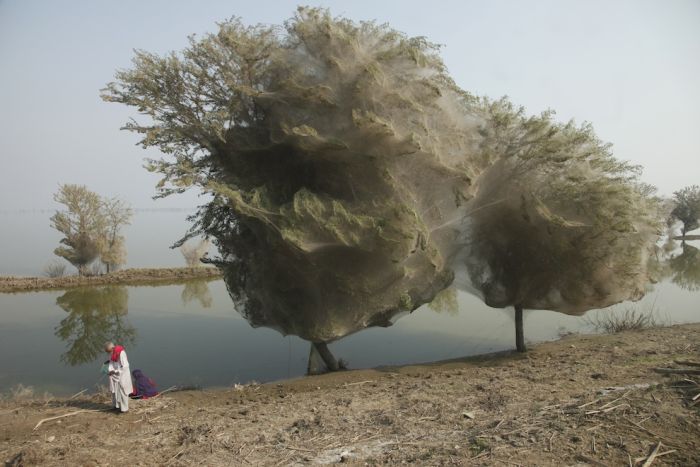
Spiders plague Trees in Pakistan - Weird


The unprecedented flooding in Pakistan in the latter half of 2010 disrupted the lives of 20 million people, but it also affected the country’s arachnid population. With more than a fifth of the country submerged, millions of spiders climbed into trees to escape the rising floodwaters. The water took so long to recede, the trees became covered in a cocoon of spiderwebs. The result is an eerie, alien panorama, with any vegetation covered in a thick mass of webbing.spiders-attack-in-pakistanHowever, the unusual phenomenon may be a blessing in disguise. The UK's department for international development reports that areas where the spiders have scaled the trees have seen a far fewer malaria-spreading mosquitos than might be expected, given the prevalance of stagnant, standing water. Well, that's one way to divert a crisis!
spiders-attack-in-pakistan
spiders-attack-in-pakistanspiders-attack-in-pakistanspiders-attack-in-pakistanspiders-attack-in-pakistanspiders-attack-in-pakistanspiders-attack-in-pakistan


Sunday, September 5, 2010

Pentagon declined to investigate hundreds of purchases of child pornography


A 2006 Immigration and Customs Enforcement investigation into the purchase of child pornography online turned up more than 250 civilian and military employees of the Defense Department -- including some with the highest available security clearance -- who  used credit cards or PayPal to purchase images of children in sexual situations. But the Pentagon investigated only a handful of the cases, Defense Department records show.
The cases turned up during a 2006 ICE inquiry, called Project Flicker, which targeted overseas processing of child-porn payments. As part of the probe, ICE investigators gained access to the names and credit card information of more than 5,000 Americans who had subscribed to websites offering images of childpornography. Many of those individuals provided military email addresses or physical addresses with Army or fleet ZIP codes when they purchased the subscriptions.
In a related inquiry, the Pentagon's Defense Criminal Investigative Service (DCIS) cross-checked the ICE list against military databases to come up with a list of Defense employees and contractors who appeared to be guilty of purchasing child  pornography. The names included staffers for the secretary of defense, contractors for the ultra-secretive National Security Agency, and a program manager at the Defense Advanced Research Projects Agency. But the DCIS opened investigations into only 20 percent of the individuals identified, and succeeded in prosecuting just a handful.
The Boston Globe first reported the Pentagon's role in Project Flicker in July, citing DCIS investigative reports (PDF) showing that at least 30 Defense Department employees were investigated.
But new Project Flicker investigative reports obtained by The Upshot through the Freedom of Information Act,which you can read here, show that DCIS investigators identified 264 Defense employees or contractors who had purchased child pornography online. Astonishingly, nine of those had "Top Secret Sensitive Compartmentalized Information" security clearances, meaning they had access to the nation's most sensitive secrets. All told, 76 of the individuals had Secret or higher clearances. But DCIS investigated only 52 of the suspects, and just 10 were ever charged with viewing or purchasing child pornography. Without greater public disclosure of how these cases wound down, it's impossible to know how or whether any of the names listed in the Project Flicker papers came in for additional scrutiny. It's conceivable that some of them were picked up by local law enforcement, but it seems likely that most of the people flagged by the investigation did not have their military careers disrupted in the context of the DCIS inquiry.
Among those charged were Gary Douglass Grant, a captain in the Army Reserves and a judge advocate general, or military prosecutor. After investigators executing a search warrant found child pornography on his computer, he pleaded guilty last year to state charges of possession of obscene matter of a minor in a sexual act in California. Others included contractors for the NSA with Top Secret clearances; one of them -- a former contractor -- fled the country after being indicted and is believed to be in Libya.
But the vast majority of those investigated, including an active-duty lieutenant colonel in the Army and an official in the office of the secretary of defense, were never charged. On top of that, 212 people on ICE's list were never investigated at all.
According to the records, DCIS prioritized the investigations by focusing on people who had security clearances -- since those who have a taste for child pornography can be vulnerable to blackmail and espionage. The documents show that the probe then concentrated on people who had been previously suspected of or convicted of sex crimes, or had access to children as part of their Defense Department duties. But at least some of the people on the Project Flicker list with security clearances were never pursued and could possibly remain on the job: DCIS only investigated 52 people, and 76 of those on the Project Flicker list had clearances.
A DCIS spokesman didn't return phone calls. But the agency's own documents obtained via The Upshot's FOIA request indicate that the decision to press investigations forward hinged largely on questions of the resources available to the investigators. "Due to DCIS headquarters' direction and other DCIS investigative priorities, this investigation is cancelled" is a common summation in the files.
A source familiar with the Project Flicker investigations -- who requested anonymity because public disclosure could jeopardize this person's job -- confirmed that departmental resources, and priorities, were decisive factors in letting inquiries lapse.
DCIS is primarily tasked with rooting out contractor fraud and investigating security breaches; its 400 staffers were already plenty busy before Project Flicker dropped 264 more names onto their caseloads. And child pornography investigations are difficult to prosecute. Many judges wouldn't issue search warrants based on years-old evidence saying the targets subscribed to a kiddie porn website once.
"We were stuck in a situation where we had some great information, but didn't have the resources to run with it," the source told The Upshot. Many of the investigative reports obtained by The Upshot end with a similar citation of scarce resources:
Of course, other federal agencies, including ICE and the FBI, may have prosecuted some of the Project Flicker names the DCIS ignored. But that's unlikely, given that some of the DCIS investigations were closed due to lack of cooperation from ICE.
In one case, involving an Army Reserve corporal in the Pittsburgh area, a DCIS agent expressed exasperation after repeatedly trying to get ICE to collaborate with him on the investigation: "Based upon the complete non-responsiveness of ICE ... it is recommended that [the] matter be closed."
As for the 212 Project Flicker names that DCIS didn't investigate, the source familiar with the investigation said there was no systematic effort to inform their superiors or commanding officers of their suspected purchases of child pornography.